A Taste of Spring at Tatte Bakery & Cafe ☕

As the temperature begins to warm up and the days are getting longer, it’s the perfect time to step outside and immerse yourself in the season of spring. If you’re looking for a place to enjoy the season and try out a new place for food, Tatte Bakery & Cafe is the perfect spot to go.

Tatte has several locations in both Boston and the Washington D.C. area. The newest addition to their list of cafes is in Rockville. In the D.C. area, you can find Tatte in popular neighborhoods such as Dupont Circle, West End, and City Center.

At Tatte, you can treat yourself with a delicious dessert, order a cup of handcrafted coffee, or enjoy a light meal. Their interior is comforting and well-decorated. Their selection of desserts include options like lemon blueberry pavlova, fruit tarts, and freshly baked goods for you to choose.

Source: Tatte Bakery & Cafe

If you’re a coffee lover, you can’t miss their house latte, which includes a unique touch of halva honey. It offers a sweet and nutty flavor that’s perfect for anyone wanting to try something different.

Source: Tatte Bakery & Cafe

And if you’re looking for a light brunch, one of Tatte’s signature dishes is the shakshuka—a popular North African dish made with eggs poached in a rich sauce of tomatoes, peppers, onions, spiced with cumin and paprika, and topped with feta and parsley. 

Source: Tatte Bakery & Cafe

So, as the season shifts and spring is about to begin, take a moment to enjoy the warmth of the outdoors. Make sure you stop by at Tatte Bakery & Cafe, where it’s the perfect place to welcome the new season!

Posted in Uncategorized | Leave a comment

Spring Broke: Fun Things to Do When Your Wallet Is on Vacation

So, Spring Break is right around the corner, and it is the perfect time to relax, recharge, and have fun. But when you’re a college student on a tight budget, extravagant vacations might be out of reach. Don’t worry! There are plenty of ways to make the most of your time off without breaking the bank. Here are some budget-friendly ideas for an unforgettable spring break:

Explore Your City

This may contain: the washington monument and reflecting pool in front of it

Image: Pinterest

First, consider being a tourist in your city. Chances are, there are plenty of cool places in your city or nearby that you haven’t explored yet. Visit local parks, museums with student discounts, free art galleries, or historical sites. Many cities have free events, concerts, or festivals happening during spring break. If you’re in the DMV area, consider visiting the National Mall, the Smithsonian Museums, or the Georgetown Waterfront for scenic views and relaxing walks.

Volunteer

This may contain: a sign that says volunteer on the side of a pier with boats in the water behind it

Image: Pinterest

Use your spring break to give back to the community. Volunteering is not only an incredibly rewarding experience, but it’s also a great way to meet new people and make a positive impact. Plus, it looks great on your resume. Look for opportunities at local charities, animal shelters, or community centers.

Catch Up on Hobbies and Self-Care

Decorate laptops, Hydro Flasks, cars and more with removable kiss-cut, vinyl decal stickers. Glossy, matte, and transparent options in various sizes. Super durable and water-resistant. Make self-care part of your daily routine. Nourish your body with good food, sleep, and exercise. Set boundaries and learn to say no. Listen to your feelings, write them down, and make time for yourself daily.

Image: Pinterest

Spring break is the perfect time to indulge in self-care and catch up on hobbies you’ve been neglecting during the semester. Whether it’s reading, painting, writing, hiking, yoga, or meditation, make time for activities that bring you joy and help you relax.

Have a Movie Marathon or Board Game Night With Friends

This may contain: a board game with lots of cards on it

Image: Pinterest

Sometimes, the best way to spend spring break is with good company and a cozy atmosphere. Host a movie marathon with your favorite films, complete with popcorn and snacks. Or, organize a board game night with friends and get competitive with classics like Monopoly, Scrabble, or Settlers of Catan.

Spring Break doesn’t have to be expensive to be fun. With a little creativity and planning, you can have an amazing time without spending a fortune.

Posted in Uncategorized | Tagged , , | Leave a comment

Balancing Career Success and Well-Being: A Holistic Approach

Lately, I’ve noticed more people prioritizing a healthier lifestyle, which is great to see. We live in a world where career success often takes center stage, and while achieving professional goals is important, it shouldn’t come at the cost of our mental, physical, and emotional well-being. I recently came across an article titled “Balancing Career Success and Well-Being: A Holistic Approach” from Washington State University, and I found its message really important. It talks about how we can shift our perspective and find a balance between work and personal life.

Why Balance is Important

Many of us believe that working harder leads to success, but when we constantly push ourselves without breaks, it can lead to stress and burnout. This article highlights the importance of not just working hard, but also taking care of ourselves—because real success includes feeling happy and healthy, not just accomplishing career goals.

Ways to Create a Healthy Balance

  1. Prioritize Self-Care – Taking care of your mind and body is just as important as meeting deadlines. Activities like exercise, meditation, reading, or spending time with loved ones help recharge your energy and keep you feeling good.
  2. Learn to Delegate – You don’t have to do everything alone. Asking for help or sharing responsibilities at work can reduce stress and also build a sense of trust with colleagues.

A New Perspective on Success

I think this type of approach will be really helpful for people looking to change their perspective and see life from a different angle. Success isn’t just about working all the time—it’s about feeling good in all areas of life. By balancing career ambitions with personal well-being, we can create a more fulfilling and sustainable lifestyle.

Reading this article was a great reminder that while our careers are important, so are our happiness, health, and time for ourselves. Finding that balance can make a big difference in the way we experience success.

This is the link to the article: https://hrs.wsu.edu/balancing-career-success-and-well-being-a-holistic-approach/?utm_source=chatgpt.com

Posted in Uncategorized | Tagged , , , , , | Leave a comment

Getting on track, one step and breath at a time

Hello everyone!

As we return to the semester and the academic season, starting or, like me, getting back to a routine can be challenging, as it takes a long adjustment period to establish a routine suited for optimal productivity. The reason it may be challenging is that we need a clear headspace to be focused and motivated. To achieve the headspace, we need to tackle the stress and anxiety preventing us from getting on track.

Source: ttps://images.app.goo.gl/BjkA2a37DQt7Lz9U6

There are different definitions of productivity; after looking at all the ways it is defined, the objectives of productivity are quantity, quality, and efficiency. Productivity, in essence, can be described as a meeting of time, attention, and energy and are the essential factors behind the objectives: setting and spending time for that task, paying needed attention to the task, and putting energy into the task- getting good results with little effort wasted. Productivity gets closer to a goal, sustaining a helpful and meaningful routine, making it optimal productivity.

Source: https://images.app.goo.gl/Dhcb1C3Shgge6CFZ7
Source: https://images.app.goo.gl/KF17kySWP5n4cTej9
Source: https://images.app.goo.gl/TdxNG8KfGJBTorkQ7

Something as simple as breathing goes a long way in helping one destress and works wonders in helping us get on track. Slow breathing is a technique that focuses the person on being centered in the present. It lets the stress and anxiety that are occupying the mind, blocking clarity and motivation, wither and fade away, supporting a positive headspace and developing a routine to get on track.

Source: https://images.app.goo.gl/EsbkQZXb4SCmhQ2G7

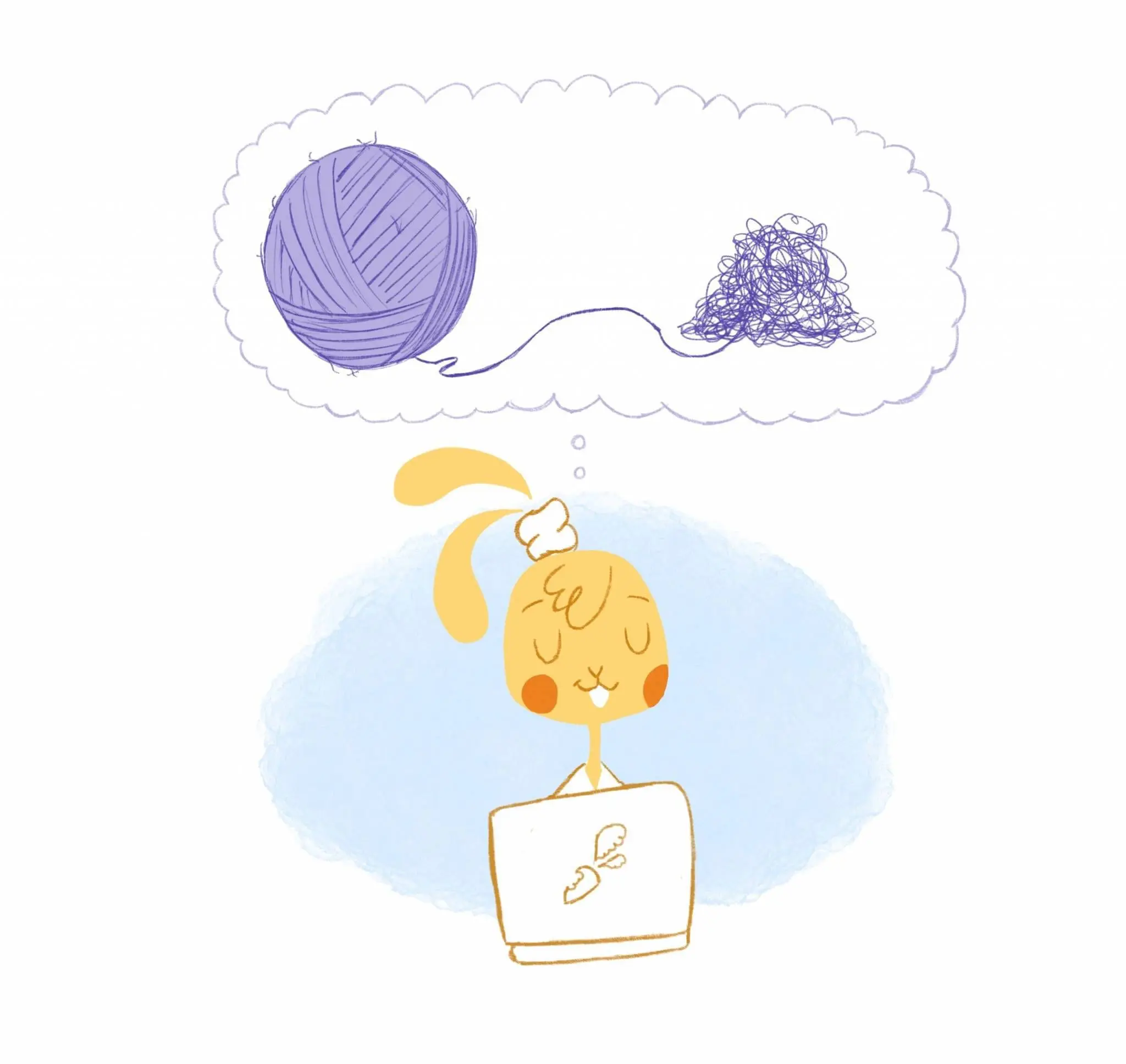
Decluttering is a great activity for reducing stress, getting a clear headspace, and directing attention to dedicated tasks in the routine building for one’s productivity to get on track. Visual clutter can produce stress, occupying the mind and contributing to procrastination, while a tidy space can help us think clearly and stay focused on our tasks. Have you ever considered the idea of thought decluttering? Just like we organize and get rid of unnecessary things in our physical surroundings, we can also organize thoughts and clear out unnecessary, negative ones.

Source:https://images.app.goo.gl/5tpSKWE6PVAwir7r8

Mindfulness, the practice of recentering attention at the moment in a non-judgmental way, is another tool to help us get back on track by easing anxiety and stress, providing clarity and focus, and creating motivation and productivity.

Source:https://images.app.goo.gl/8kxLMuqvWef5ba8g6


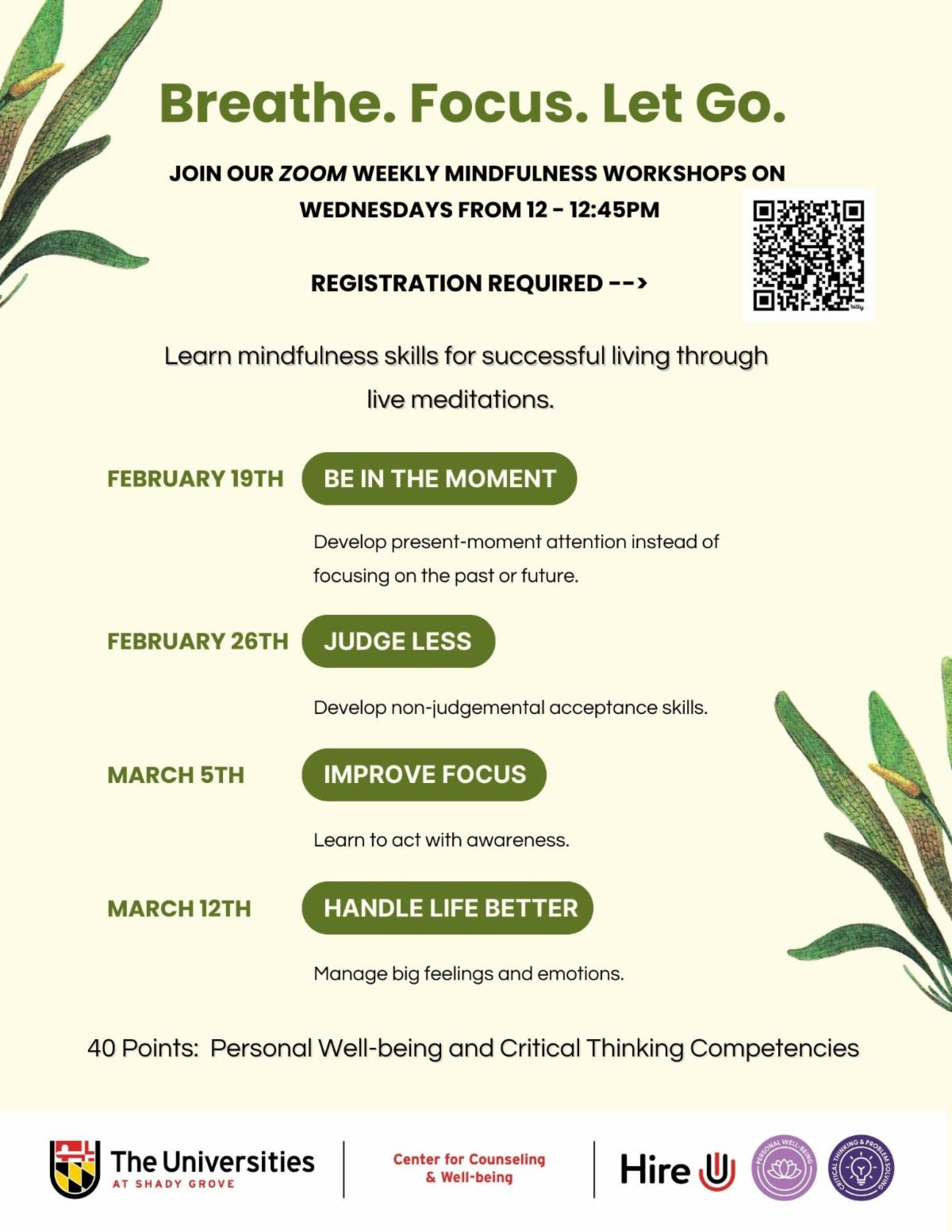
The USG’s weekly bulletin email shares workshops the counseling center hosts to help understand and participate in mindfulness as a valuable skill development for managing and reducing stress and anxiety, fostering productivity. In the workshop, you are told the benefits of mindfulness and participate in the practice, taking note of a reoccurring emotion. By practicing mindfulness, you can identify that reoccurring emotion accompanying stress and anxiety that may be stopping you from a clear headspace needed to be productive.

Source: Universities at Shady Grove

So, there are a few steps to get on track: breathing, decluttering, and mindfulness; these steps benefit mental health and enhance productivity by increasing clarity and focus, helping us beat procrastination and find our motivation, getting us on track. Let’s do this!

Source: https://images.app.goo.gl/aSAdeJBYiK2PxJN56

Posted in Campus Activities, Faculty & Staff, Fitness & Wellness, Life at USG, Student Event, students, Uncategorized, Work Experience | 2 Comments

Lunar New Year: The Year of the Snake 🐍

Lunar New Year is one of the most significant traditional holidays in many Asian cultures. It is a time for families to come together and wish for prosperity and good fortune in the year ahead. 

Some traditions includes giving red envelopes (紅包, hóngbāo”), dragon and lion dance, Lunar New Year’s Eve dinner with family, and wearing new clothes, preferably red to symbolize luck and good fortune. 

Each year in the lunar calendar is associated with one of the 12 zodiac animals, which rotate in a 12-year cycle. The 12 animals in order are Rat (鼠), Ox (牛), Tiger (虎), Rabbit (兔 ), Dragon (龍), Snake (蛇), Horse (馬), Sheep (羊), Monkey (猴), Rooster (雞), Dog (狗), Pig (豬).  I was born in 2002, which makes me born in the Year of the Horse! Below is a diagram for reference.

Source: Google

Each animal is believed to influence the personality and fortunes of those born in the year representing the animals. For example, people born during the Snake years are thought to be wise and mysterious.

Two of the most representative traditional foods associated with Lunar New Year are dumplings and fish. Dumplings are considered a symbol of wealth, with their shape resembling ancient gold money. Fish is served to symbolize abundance and good luck. The word for fish (魚, yú) sounds like “surplus” in Chinese, suggesting prosperity in the new year.

Wishing everyone the best of health and prosperity during this Year of the Snake!

Source: Pinterest

Posted in Uncategorized | Leave a comment

Effective Reading Strategies for College Students

Reading in college can feel overwhelming. There are so many textbooks, articles, and notes to go through. It’s easy to get distracted or feel lost. But don’t worry! Using the right strategies can make reading easier and more effective. Here are a few reading strategies that can help college students stay on top of their work.

Source: Google

1. Preview the Material
Before diving into a reading, take a few minutes to preview it. Skim the headings, subheadings, and any bold or italicized words. Look at pictures, charts, or summaries if they are available. This will give you an idea of what the reading is about. It also helps you focus on the main points.

2. Take Notes While Reading
Writing notes while reading keeps your mind active. Try highlighting key points or writing summaries in your own words. You can also use sticky notes or make a separate notebook for important ideas. This makes it easier to review later. Taking notes helps you remember what you read. It also saves time when you need to study for exams.

3. Break It Into Sections
Long readings can feel overwhelming. Instead of reading everything at once, break it into smaller sections. Read a few paragraphs or pages at a time and then take a short break. This helps your brain process the information better. It also makes reading feel less tiring. If you rush through everything at once, you might forget what you read.

4. Ask Questions While Reading
Asking questions helps you stay engaged. Try to think about what the author is trying to say. Ask yourself why certain points are important. If something is confusing, write it down and look it up later. You can also discuss the material with classmates. Talking about what you read helps you understand it better.

5. Review and Summarize
After finishing a reading, take a few minutes to review. Try to summarize the main points in your own words. You can do this by writing a short paragraph or saying it out loud. Reviewing helps reinforce what you learned. It also makes it easier to recall information later. The more you practice this, the better your reading skills will become.

Source: Google

Reading in college doesn’t have to be stressful. With the right strategies, you can make it easier and more enjoyable. Try these tips and see what works best for you. Good luck, and happy reading!

Posted in Academics, students, Uncategorized | Tagged , , , , , , | Leave a comment

How to Feel Loved & Appreciated This Valentine’s Day (Even If You’re Single)

– Tips on self-love, meaningful connections, and personal joy.

This may contain: valentine's day card with the words, love yourself and self care

Image: Pinterest

Hi there! Ah, the season of love is upon us once again – when hearts flutter, roses bloom, and couples worldwide celebrate their affection for one another. But as we all know, Valentine’s Day can be a rather polarizing affair.

Some revel in romantic rituals, indulging in lavish gifts, elaborate date nights, and sentimental-sweet gestures. Others, however, may feel a sense of loneliness, exclusion, or even hate for the commercialized frenzy surrounding this Hallmark holiday.

Whether you’re in a relationship or flying solo, the pressure to find the “perfect” way to observe February 14th can be overwhelming.

But fear not my friends – there are ways to feel loved, appreciated, and joyful this Valentine’s Day, regardless of your relationship status.

First and foremost, remember the importance of self-love. As much as this holiday is marketed as a celebration of romantic love, the most crucial relationship you have is the one with yourself.

Take time to pamper yourself, engage in activities that bring you joy, and surround yourself with the people and things that make you feel whole.

Cultivate meaningful connections with loved ones, whether that’s your partner, family, friends, or a supportive community.

Sharing quality time, heartfelt conversations, and acts of kindness can be far more meaningful than any store-bought gift.

Lastly, embrace the season’s magic in your own way. Attend a Galentine’s Day celebration, volunteer at a local charity, or simply immerse yourself in the beauty of the season.

By focusing on what truly matters, you can transform this holiday into a celebration of love, belonging, and personal fulfillment.

So, go forth and make this Valentine’s Day your own.

Posted in Uncategorized | Leave a comment

Escaping Stress, One Paw at a Time

Life can feel like a never-ending cycle of deadlines, responsibilities, and expectations. Between school, work, and personal commitments, it’s easy to feel overwhelmed. When stress starts piling up, I’ve found that one of the best ways to escape it all is by spending time with animals. There’s something incredibly calming about their presence—the way they move without urgency, their ability to live in the moment, and the unconditional comfort they provide.

I’ve always wanted a cat, but I never really considered myself a cat person—until I found myself in a room full of them. Stepping into a cat café for the first time was an unforgettable experience. The cozy atmosphere, the soft hum of conversation, and the warmth of a latte in hand—all while being surrounded by cats—was the perfect recipe for relaxation.

What made the experience even more special was learning about the cats’ journeys. Many had been rescued and were in the process of finding new homes. It was heartwarming to see them safe, playful, and cared for. Each cat had its own personality—some were curious and mischievous, while others were content to curl up beside me. It was also a great way to catch up with friends, sharing laughs while enjoying the company of these adorable felines. The experience made me realize that animals, even in the simplest moments, have a way of bringing people together and creating a sense of comfort.

This is Captain Gray (One of the cats in the cafe)

Over the summer, I had the chance to visit several safaris, where I was able to see animals roaming in open spaces, closer to their natural habitats. Being surrounded by wildlife, watching zebras graze or giraffes reach for leaves high above, was a surreal experience.

What made it even more special was the chance to interact with some of the animals—to touch them, feed them, and observe their behaviors up close. It gave me a small taste of farm life, something I’ve always admired. There’s an undeniable magic in these moments—standing close to an animal much larger than yourself and realizing how interconnected we all are. It was a humbling experience, one that reminded me of the beauty of nature and the importance of appreciating it.

Spending time with animals, whether in a cat café, a barn, or a safari, has become my favorite way to destress. It’s more than just a fun experience—it’s a way to disconnect from the pressures of daily life and reconnect with something simpler, more grounding.

Posted in Uncategorized | Tagged , , , , , | Leave a comment

New Year Resolutions, Regrets, and Reflection

Hi everyone!

Happy New Year! 🎉

I hope you all had a restful holiday break.

Did you make New Year’s Resolutions?

I used to make my New Year’s Resolutions too overwhelming and took them too seriously, putting too much pressure on myself to be strict on continuing it all year round, leading me to get frustrated and tend not to follow through; I would be dedicated at the beginning, forget by mid-year, and then remember toward the end of the year, in between, I would also add things along the way at the beginning of every week or month, overcomplicating what I want to do and achieve. I think most people are like that, making New Year’s resolutions often the same ones that are long, firm, and unrealistic, causing people not to follow through. So much so that there are commercials at this time of year saying that people usually quit the following days after making resolutions.


We are making them too complicated, stressing ourselves out, and losing sight of the purpose of making resolutions; we need to break them down going back to basics: New Year’s resolutions mean brainstorming goals we intend to achieve and are no different than year-round goal setting, but somehow, we make this great thing with the most impressive expectations; it doesn’t have to be as big or long or rigorous as we think it needs to be-just to be manageable.

That is why my New Year’s Resolutions look different now; they are reminders to keep- paying more attention to my health, saving more money, and reaching out to family more.

I took Psychology of Aging and Aging and the Longevity Economy this semester. Two things I learned from the classes are about regrets and how vital saving money is. In my psychology of aging class, I viewed a TED Talk on the common types of regrets and how the saying ‘Living with no regrets’ misses the point. It’s all about reflecting on our experiences so we can learn and grow from them. In both classes, I learned that saving money is investing in your future’s well-being; saving money is important in providing stability and creating chances for ourselves; we tend to underestimate potential costs and financial worry.

Stress may fuel setting resolutions because it empowers desired change from regrets but is an opportunity for reflection to set goals and create resolutions. Recalling my previous post, I want to write about stress, emphasizing the importance of tackling and befriending it because it is part of an underlying theme in people’s health, and we need to be aware of the manifestations in our lives.

Below is the Ted Talk viewed in the class.

Source: 4 Kinds of Regret – and What They Teach You about Yourself | Daniel H. Pink | TED https://www.youtube.com/watch?v=cenxg8j-Rc0

I would like to know your New Year’s Resolution, what you put it in, and why. What does it look like? How do you feel about it, and does it help with your stress?

Posted in Uncategorized | Tagged , , | Leave a comment

Planting Roots – Overcoming Imposter Syndrome and Growing Into Your Potential

“Doubt kills more dreams than failure ever will.” – Suzy Kassem

Pinterest

As college students, we’re constantly surrounded by high achievers, ambitious peers, and an ever-increasing workload. It’s easy to start doubting whether we belong, questioning our abilities, or feeling like we’re not “good enough.” This nagging self-doubt has a name: imposter syndrome.

Imposter syndrome is the internal belief that your achievements are due to luck, not your abilities and that sooner or later, others will figure out you’re a fraud. It’s a mental battle many college students face, often silently. But why does it hit us so hard in college, and what can we do about it?

Growing up, I moved schools and even countries multiple times, and with every move came the challenge of starting over. Whether it was adjusting to a new curriculum, learning the unspoken social rules, or simply trying to make friends, I always felt like I was playing catch-up.

In every school, it seemed like everyone already had their place with each other—established friendships, shared experiences, and an ease that I envied. Meanwhile, I was the “new kid,” trying to fit in without drawing too much attention to myself. Even when I succeeded academically or socially, I couldn’t shake the feeling that I didn’t truly belong.

This pattern of starting over followed me into college, where I compared my journey to others. The doubts crept in again: Was I good enough to be here? Did I deserve my opportunities? These questions became a mental hurdle that made it harder to celebrate my achievements.

Over time, I’ve learned that imposter syndrome doesn’t just go away alone—you have to actively work to challenge those feelings. While I’ve made significant progress, I’ll be the first to admit that I’m not perfect. I still struggle with self-doubt from time to time, but these strategies have helped me manage those feelings and move forward:

  • Recognize That You’re Not Alone
    One of my biggest turning points was realizing that I wasn’t the only one feeling this way. Many people, even those who seem incredibly confident and successful, deal with imposter syndrome. Talking to friends, mentors, or classmates about my feelings helped me see that self-doubt is a shared experience, not a personal flaw.
  • Focus on Your Strengths
    Instead of fixating on what I thought I lacked, I started identifying the unique strengths I brought to the table. My ability to adapt quickly, my global perspective, and determination to succeed despite challenges set me apart.
  • Celebrate Small Wins
    I began keeping track of my accomplishments, no matter how small they seemed. Whether it was acing a quiz, contributing to a group project, or even speaking up in class, I took a moment to acknowledge my progress. Over time, these small celebrations built my confidence.
  • Reframe Your Perspective
    I reframed my self-doubt as a sign that I was growing. Feeling out of your comfort zone means you’re challenging yourself, and that’s something to be proud of. I reminded myself that everyone starts somewhere, and perfection isn’t the goal—progress is.
  • Practice Self-Compassion
    I am learning to be kinder to myself (It is still a work in progress!). Instead of criticizing every mistake, I started treating myself with the same understanding I’d offer a friend. Growth takes time, and it’s okay to stumble along the way.

No matter how often you’ve started over or how many times you’ve doubted yourself, remember this: you belong here, and you are capable of achieving incredible things. Overcoming imposter syndrome isn’t an overnight fix—it’s a journey that takes time and patience. Be kind to yourself and take it slow, one step at a time. Each small step you take is a victory, and every bit of progress brings you closer to embracing your full potential.

Posted in Uncategorized | Leave a comment