
Hello there, friends!
Quick question: How’s your mood today? Hopefully, it’s sunny, but if not, hang tight because I’ve got a game-changing secret to share that could turn things around fast!

You might have heard, “You are what you eat.” But here is a new one for you: “FOOD impacts your MOOD.”
Happiness and well-being are universal needs, and being emotionally on point doesn’t just benefit you; it works wonders in every aspect of life, including your studies, work, family and colleague interaction, and the list goes on. According to a group study by the departments of psychology and business at Carleton University, “Similarly, at the state level of analysis, people were more productive when they were happier.” (Zelenski, 2008)
Fast food? It’s a happiness downer.
Sure, that candy bar or chips may provide a quick mood boost, but it’s a temporary fix that can lead to long-term problems.
On the flip side, healthier foods may not always be as tasty as your guilty pleasures, but they’re the real happiness deal.
Extensive research, especially over the last decade, shows that a healthier diet leads to more happiness. Your gut is connected to your brain, and it’s a powerful duo that can make or break your mood.
Here’s my secret for you: psychobiotics. Lactobacillus, a probiotic superhero, can do wonders for your gut and, in turn, your mood.
Lactobacillus is a psychobiotic bacteria that is frequently used in gut-to-brain research due to its many benefits in the digestive tract and increasing proof of it positively impacting one’s mood.
In an investigation by the Department of Psychology at the University of Wales Swansea, lactobacillus probiotic supplementation resulted in “significantly more participants self-rating as happy rather than depressed.” (Sarkar, 2016)
If yogurt isn’t your thing, load up on fruits and veggies rich in prebiotic fibers, like bananas, garlic, oats, apples, and dandelion greens.
Sure, healthy eating might seem pricier than fast food but think of it as an investment in yourself. You’re not just eating; you’re cultivating happiness.
In a study highlighted by the National Institute of Health and conducted by the Department of Health studies in Westat, The National Institute of Health “Meanwhile, a significantly lower prevalence of depression symptoms was found in individuals with a low consumption of ‘ready-to-eat’ foods.” (Guo, 2014)
This study concludes the negative side effects of fast food on well-being.
Remember, you’re planting seeds in your body’s garden, and the harvest is worth it. Smart diet choices mean a happier you, better work performance at the university or your work, and a happier life overall.
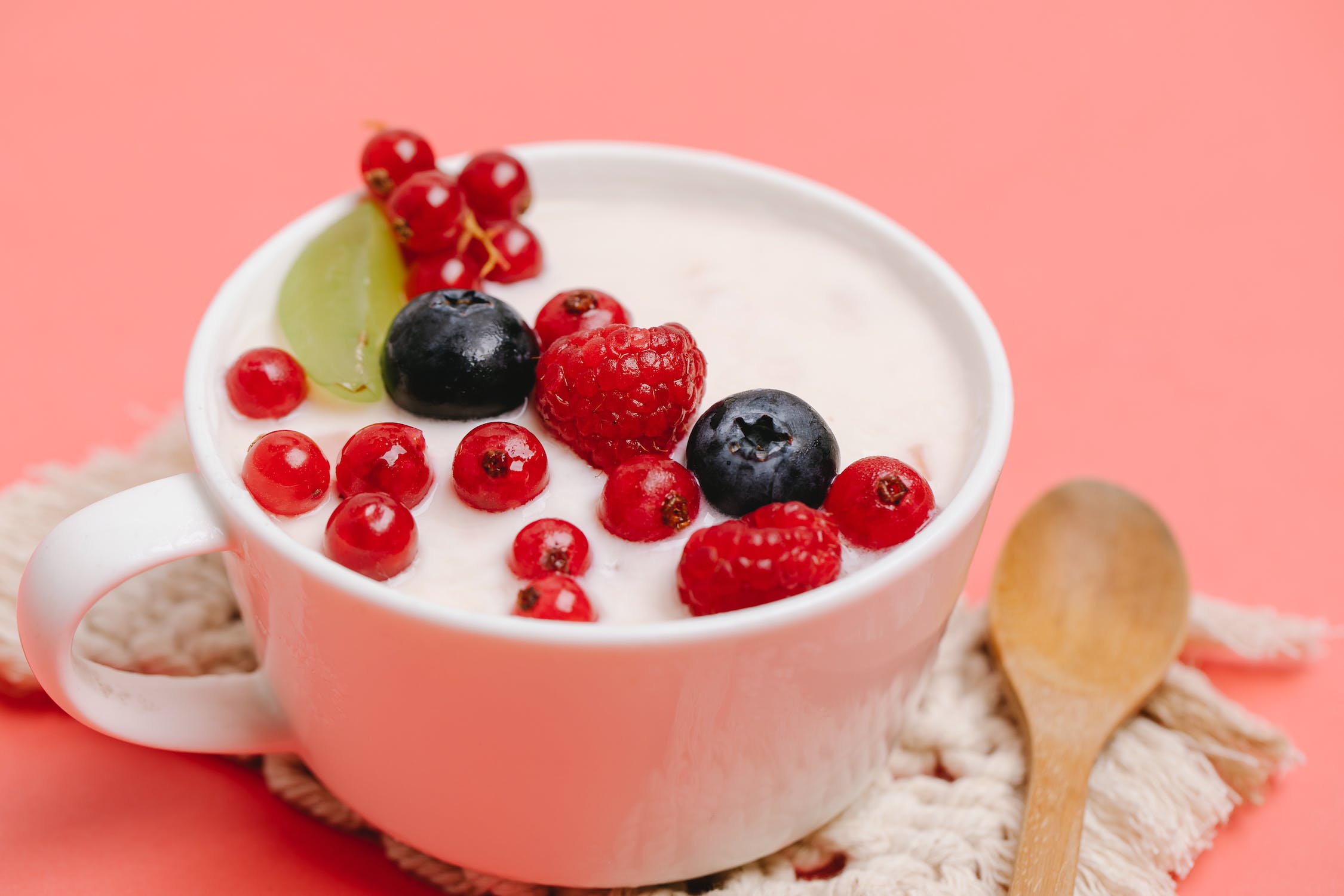
As a Bulgarian, I would proudly suggest the best source of psychobiotics – plain yogurt that contains (take note of the name) Lactobacillus bulgaricus.
Yogurt is super easy to combine with any dish or snack or to even eat on its own! And it is a fantastic friend when it comes to getting to class or work on time too.
References
Zelenski, Murphy, S. A., & Jenkins, D. A. (2008). The Happy-Productive Worker Thesis Revisited. Journal of Happiness Studies, 9(4), 521–537. https://doi.org/10.1007/s10902-008-9087-4
This study combined longitudinal prospective and experience sampling methods to examine the relationship between happiness and self-reported productivity among Directors employed in the public and private sectors. Analyses at a trait level suggested happy people were more productive. Similarly, at the state level of analysis, people were more productive when they were happier.
Sarkar, Lehto, S. M., Harty, S., Dinan, T. G., Cryan, J. F., & Burnet, P. W. . (2016). Psychobiotics and the Manipulation of Bacteria–Gut–Brain Signals. Trends in Neurosciences (Regular Ed.), 39(11), 763–781. https://doi.org/10.1016/j.tins.2016.09.002
“However, when only participants whose baseline mood scores fell in the lowest third of the total range were analyzed, probiotic supplementation resulted in significantly more participants self-rating as happy rather than depressed, relative to placebo.”
Guo, X., Park, Y., Freedman, N. D., Sinha, R., Hollenbeck, A. R., Blair, A., & Chen, H. (2014). Sweetened beverages, coffee, and tea and depression risk among older US adults. PloS one, 9(4), e94715. https://doi.org/10.1371/journal.pone.0094715
“Meanwhile, a significantly lower prevalence of depression symptoms was found in individuals with a low consumption of ‘ready-to-eat’ foods.”

 USG
USG
 The Universities at Shady Grove (USG)